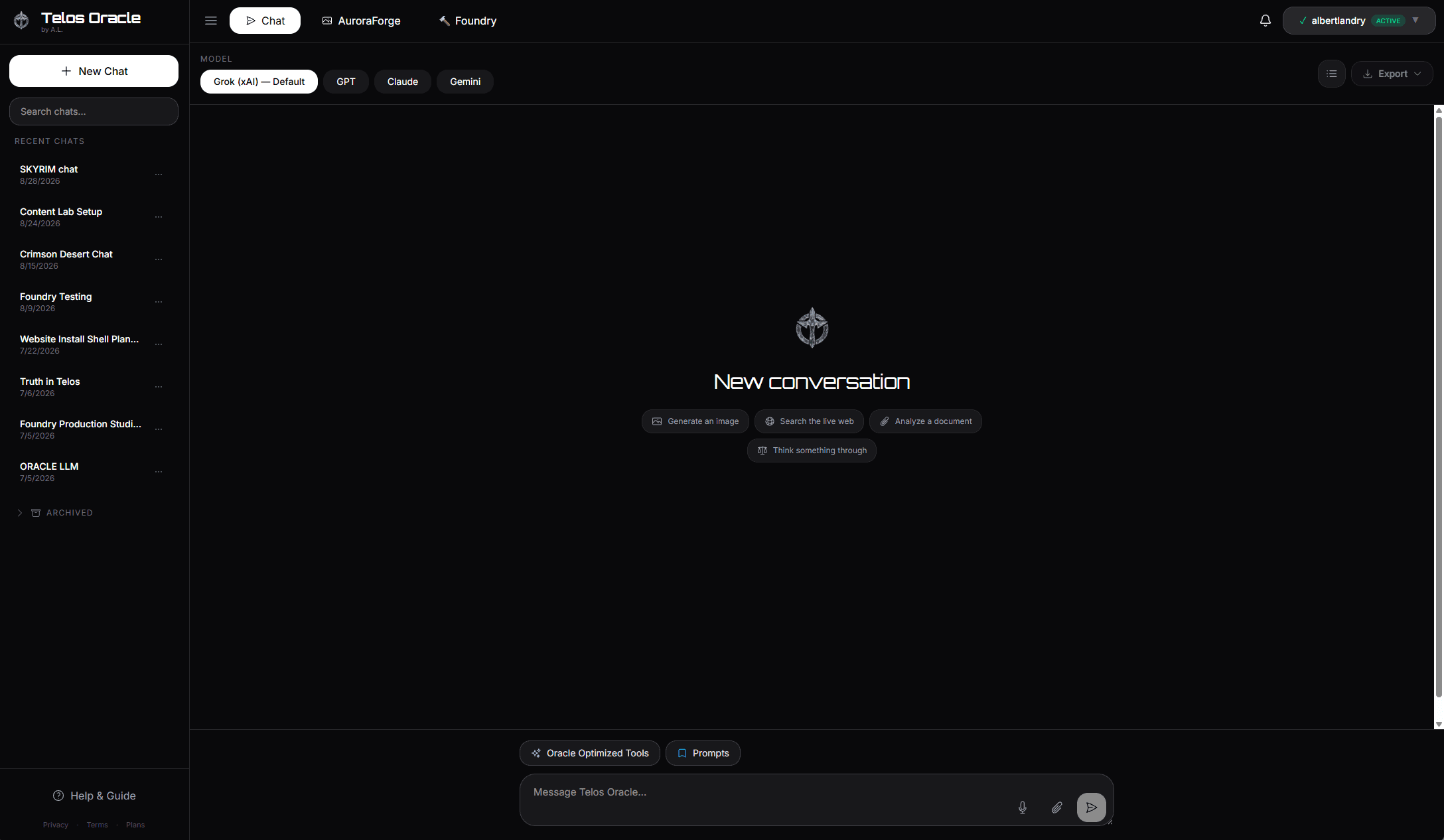
Telos Oracle puts four frontier models in one thread — switch or regenerate whenever you want, without losing context — and bolts on the tools operators actually ship with: lead prospecting, grant writing, visual generation, and search optimization.
Four frontier models in one thread — switch or regenerate mid-conversation without losing context.
Operator tools included: prospecting, grant proposals, visuals, answer-engine optimization, and live research.
Replaces roughly $150/mo of separate subscriptions with a $49/mo Pro plan.
Free tier is real and does not expire: 500 AI credits a month, no card required.
The problem
Five subscriptions, five tabs, no shared context
Every tool holds part of your work and none of them talk to each other. You pay five times and still copy-paste between them.
Typical solo-founder AI stack compared with Telos Oracle Pro
What you pay for today
Monthly
Replaced by
ChatGPT Plus
$20
Telos Chat
Claude Pro
$20
Telos Chat
An image tool
$30
AuroraForge
Apollo seat
$49
Lead Sleuth
An outreach tool
$37
Lead Sleuth email
Total
$156$49Telos Oracle Pro
What you get
Tools that share one workspace
Every tool reads the same context and writes to the same storage, with its own monthly allowance rather than one balance they all drain. Nothing to wire up.
Telos Chat
Grok, Claude, GPT, and Gemini in one thread — switch or regenerate at will
Switch models mid-conversation. Regenerate any answer with a different one. Nothing resets, nothing is merged behind your back — you stay in control of which model is speaking, and the thread never loses a beat.
Change models mid-chat without restarting the conversation
Regenerate any response with a different model and compare
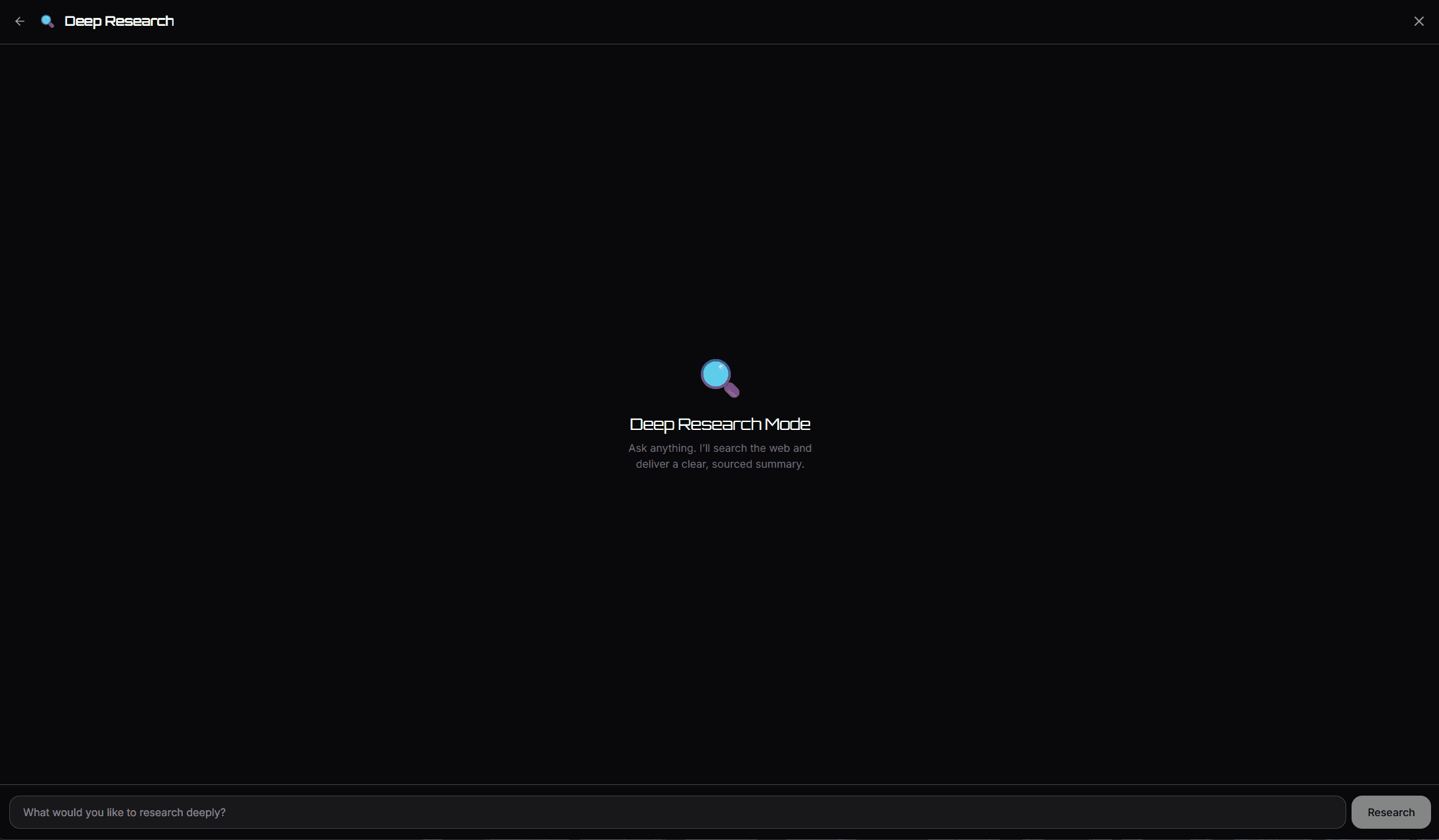
Live web research with sources, in the thread you are already in
Every model in existence has a training cutoff, and every one of them will answer a question about last week with total confidence anyway. Deep Research searches the live web instead, then hands back a sourced summary you can actually check — inside the same thread, so the findings carry into whatever you ask next.
Answers from the live web, not from a training cutoff
Sources attached, so a claim can be verified instead of trusted
Built for prices, releases, current events, this quarter's numbers
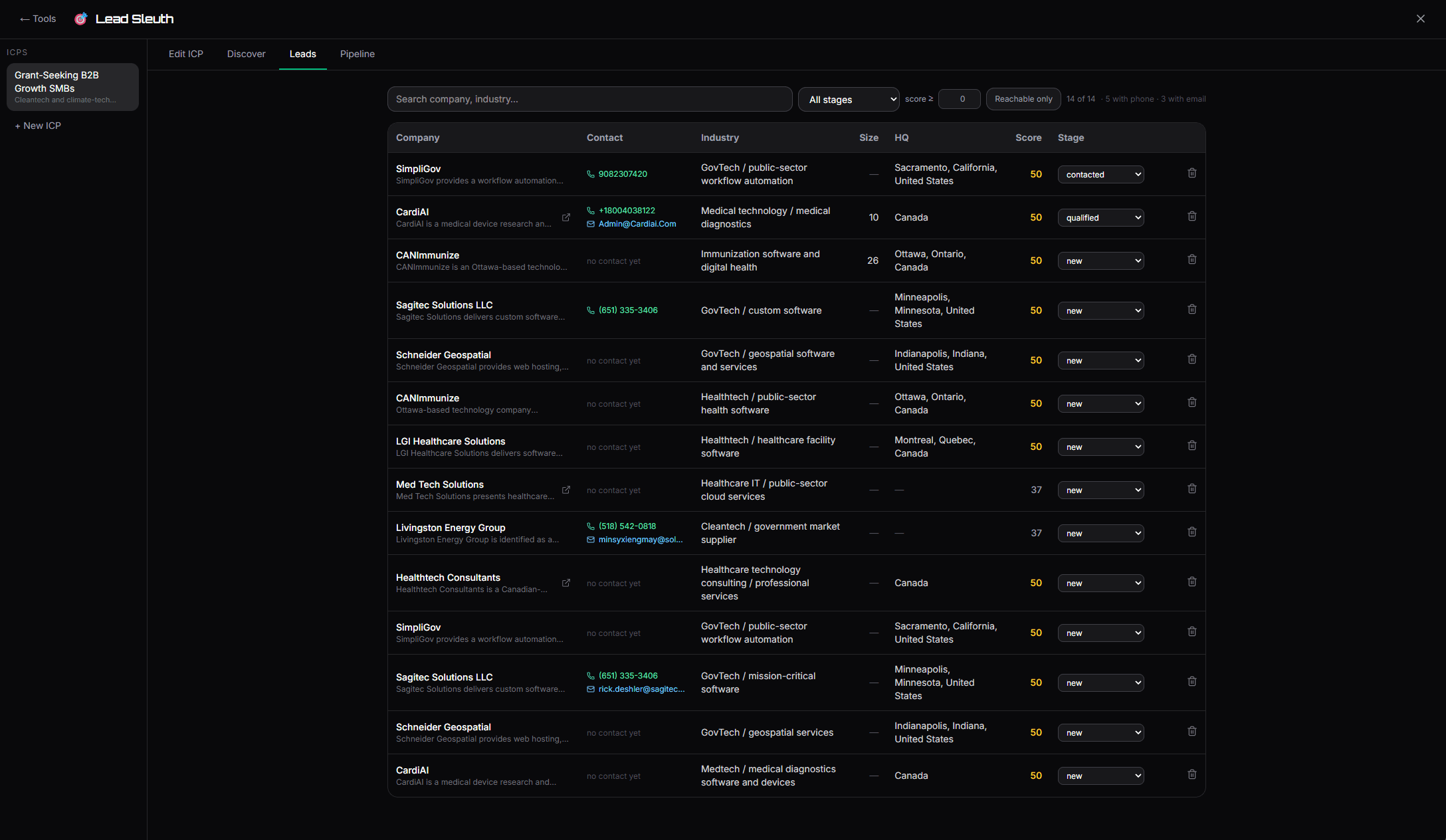
ICP-driven prospecting, PeopleMatch enrichment, and outbound email
Build an ICP once and it drives everything after it — discovery, scoring, and outreach. Apollo depth for the firmographics, live web enrichment for the rest, and PeopleMatch when you need a contact route rather than a company.
One ICP drives discovery, scoring, and outreach together
"Reachable only" filters to leads with a real phone or email
PeopleMatch enrichment when you need the person, not the company
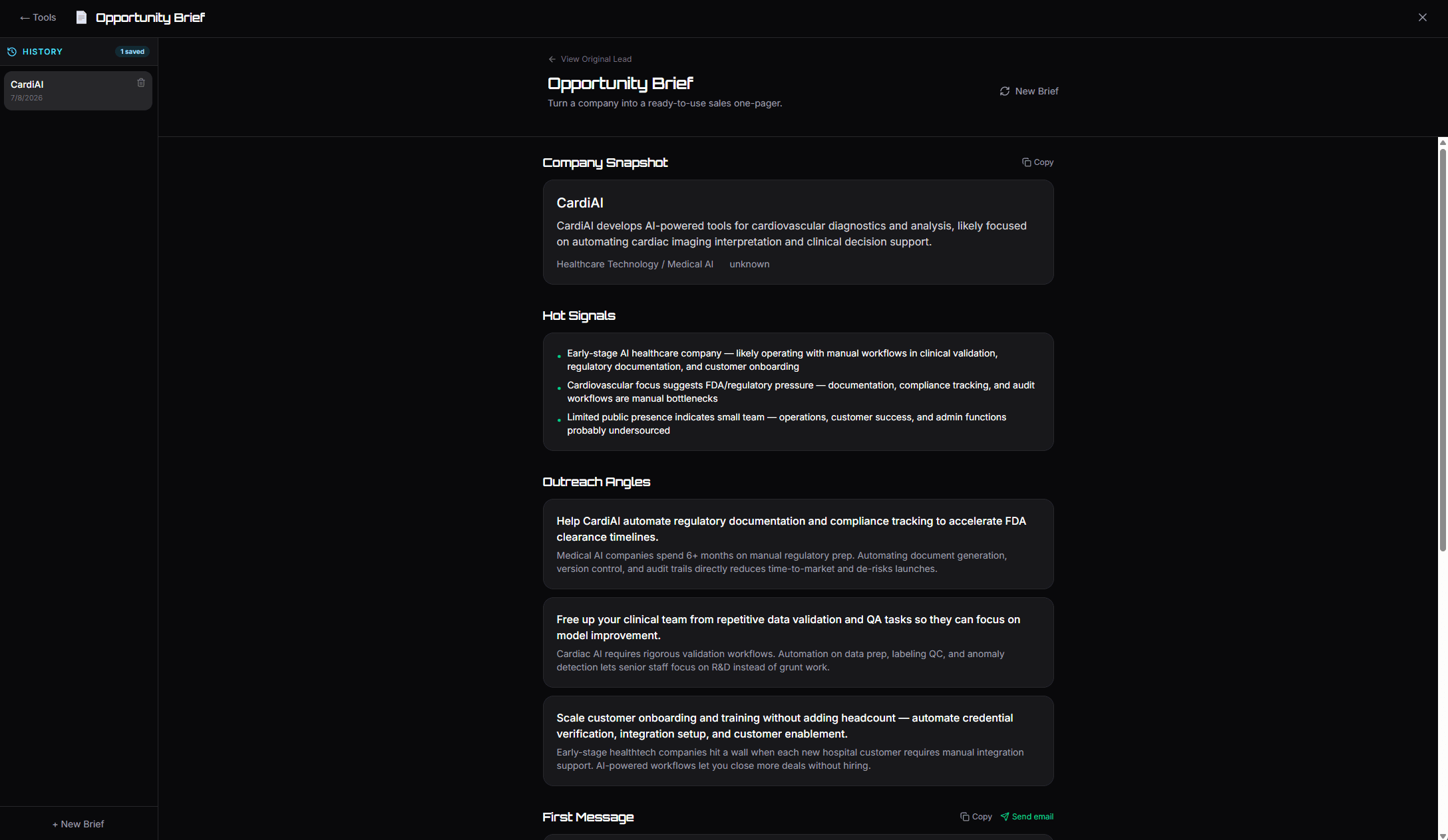
Signals, angles, a first message, and objection prep
Give it a company name, a domain, or a website and it returns the brief you would otherwise spend a morning assembling: signals, angles, a first message, and the objections you should expect.
Launch it straight from a lead in Lead Sleuth, details carried across
Real signals and angles rather than a company description
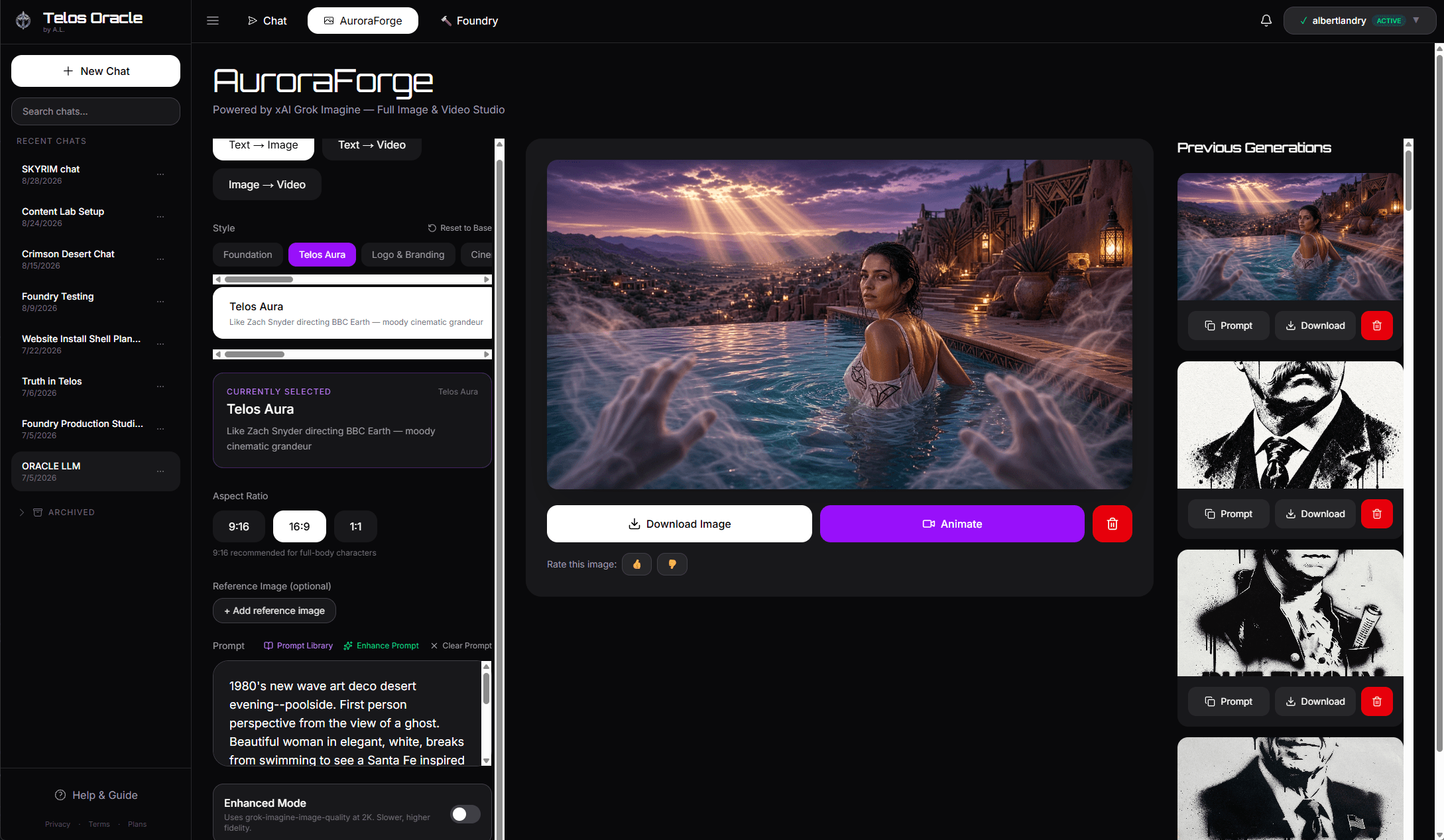
58 built-in styles, image and video generation, in-thread
58 built-in styles across cinematic, anime, comic, game, fine art, logo, and design categories — plus the Telos Aura line. Strong prompt adherence, and consistency held across a whole asset set rather than one lucky render.
Polished visuals without leaving the conversation
58 styles across nine categories, including the Telos Aura line
Brand and character consistency across a full asset set
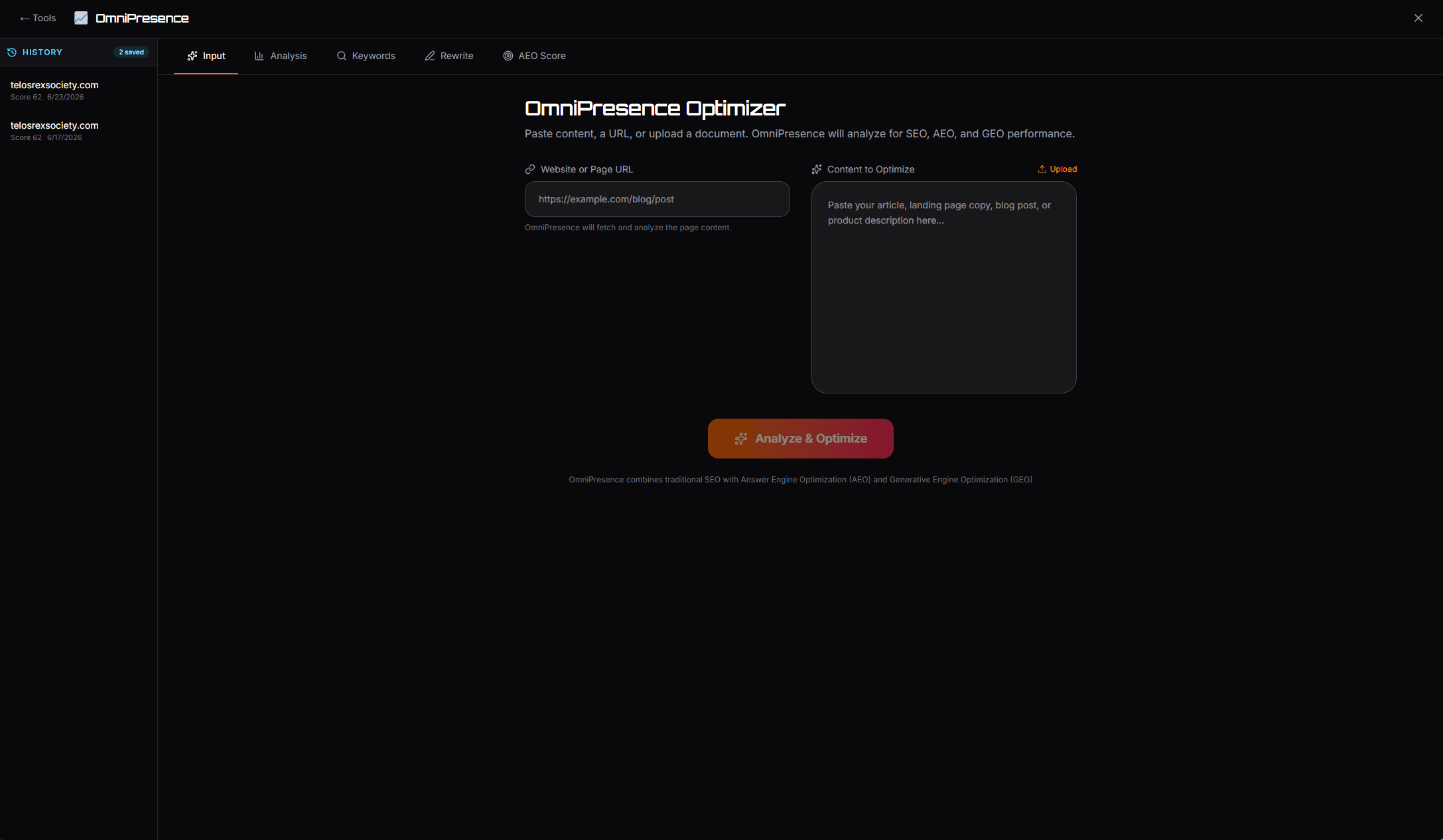
Paste content or a URL and it scores how well the page performs where answers are actually being read now — AI answer engines as well as traditional search. Then it shows you the gaps and rewrites for them.
Analysis tab for the breakdown of what is working and what is not
Keywords tab surfaces the gaps you have not covered
Rewrite tab returns a stronger version, not just a critique
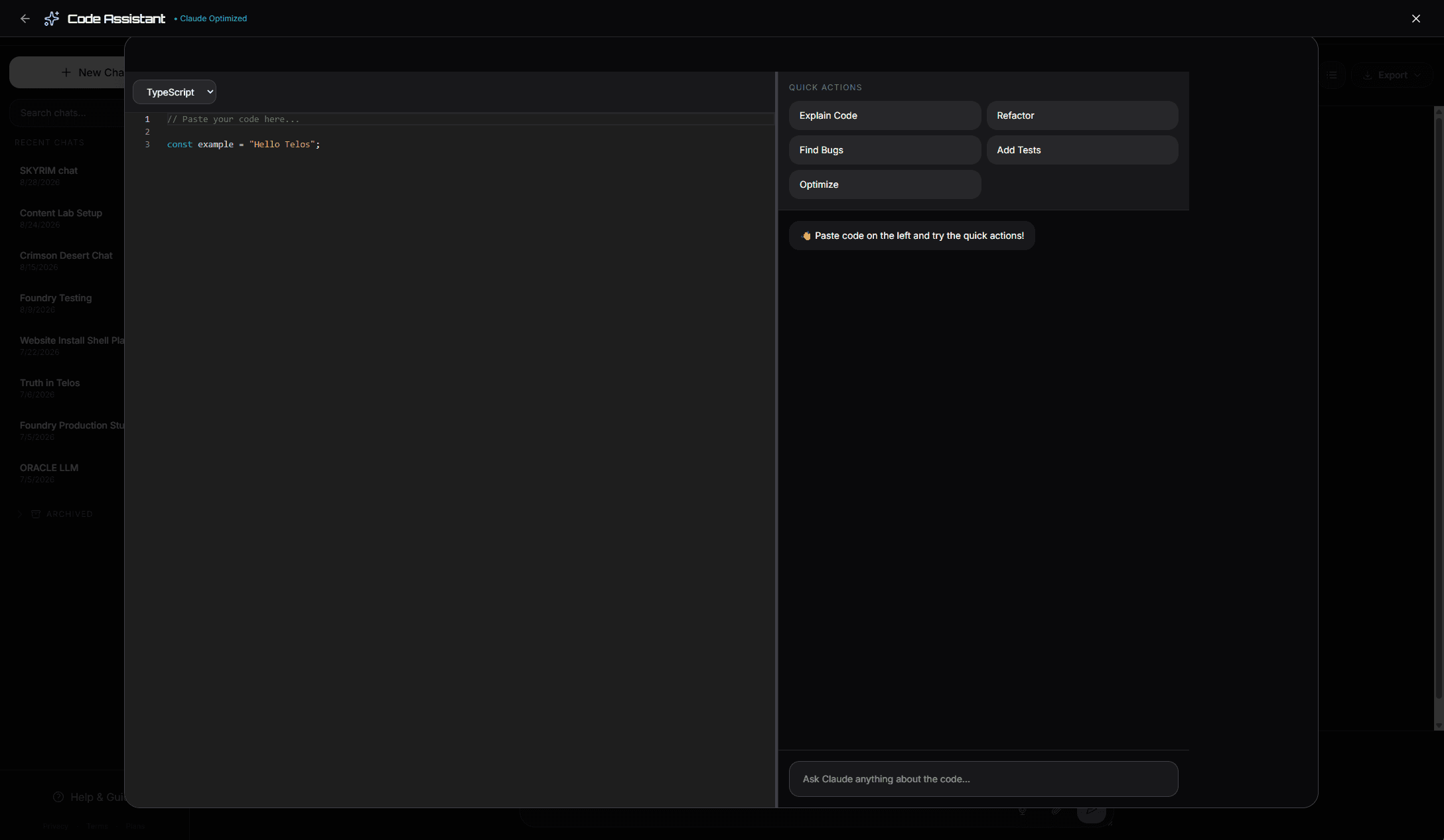
Always Fable 5, with Quick Actions and full follow-up context
Not the chat model with a code-shaped prompt. Code Assistant always runs on Claude Fable 5 — the most capable model in the workspace — with Quick Actions for Explain, Refactor, Find Bugs, Add Tests, and Optimize, or you can ignore the buttons and just ask.
Pinned to Fable 5 — no silent downgrade to a cheaper model
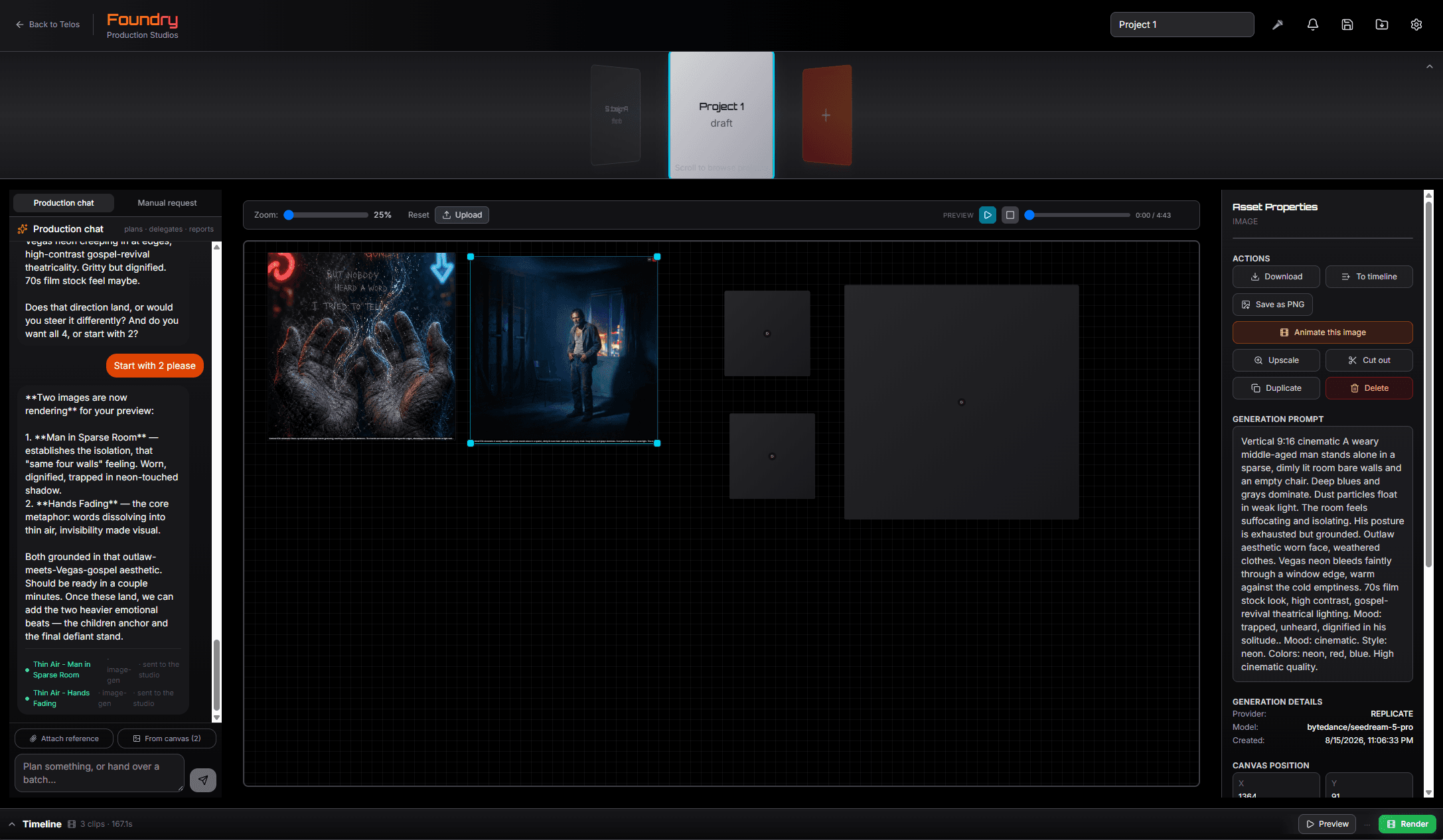
22 models across video, image, music, voice, 3D, and vector
This is where the comparison to an image generator falls apart. Foundry is a production studio with a canvas and a timeline, spanning 22 models across video, image, music, voice, 3D, and true vector — driven by direct control or by a production chat that plans and delegates the renders for you. Ask a still-image tool for a song with a specified BPM and key and see what happens.
Full songs with BPM and key control — instrumental or with lyrics
Voice, narration, and cloning in 32+ languages
Multi-shot video with element locking and native lip-sync dialogue
Switch models mid-conversation. Regenerate any answer with a different one. Nothing resets, nothing is merged behind your back — you stay in control of which model is speaking, and the thread never loses a beat.
Change models mid-chat without restarting the conversation
Regenerate any response with a different model and compare
Full context carries across every switch
You pick the model — no hidden routing, no forced merge
Every model in existence has a training cutoff, and every one of them will answer a question about last week with total confidence anyway. Deep Research searches the live web instead, then hands back a sourced summary you can actually check — inside the same thread, so the findings carry into whatever you ask next.
Answers from the live web, not from a training cutoff
Sources attached, so a claim can be verified instead of trusted
Built for prices, releases, current events, this quarter's numbers
Findings stay in context for the follow-up questions
Find Your Next 100 Customers Without Leaving the Workspace
Build an ICP once and it drives everything after it — discovery, scoring, and outreach. Apollo depth for the firmographics, live web enrichment for the rest, and PeopleMatch when you need a contact route rather than a company.
One ICP drives discovery, scoring, and outreach together
"Reachable only" filters to leads with a real phone or email
PeopleMatch enrichment when you need the person, not the company
Send from your own domain on Pro and up, or the built-in sender
Give it a company name, a domain, or a website and it returns the brief you would otherwise spend a morning assembling: signals, angles, a first message, and the objections you should expect.
Launch it straight from a lead in Lead Sleuth, details carried across
Real signals and angles rather than a company description
Generate Visuals and Video Without Leaving the Chat
58 built-in styles across cinematic, anime, comic, game, fine art, logo, and design categories — plus the Telos Aura line. Strong prompt adherence, and consistency held across a whole asset set rather than one lucky render.
Polished visuals without leaving the conversation
58 styles across nine categories, including the Telos Aura line
Brand and character consistency across a full asset set
Generated media lands in your workspace storage automatically
Score Your Content for AI Answer Engines, Not Just Search
Paste content or a URL and it scores how well the page performs where answers are actually being read now — AI answer engines as well as traditional search. Then it shows you the gaps and rewrites for them.
Analysis tab for the breakdown of what is working and what is not
Keywords tab surfaces the gaps you have not covered
Rewrite tab returns a stronger version, not just a critique
AEO Score to track a page over time instead of guessing
Not the chat model with a code-shaped prompt. Code Assistant always runs on Claude Fable 5 — the most capable model in the workspace — with Quick Actions for Explain, Refactor, Find Bugs, Add Tests, and Optimize, or you can ignore the buttons and just ask.
Pinned to Fable 5 — no silent downgrade to a cheaper model
Twenty-Two Models. Video, Stills, Full Songs, Voice, and 3D.
This is where the comparison to an image generator falls apart. Foundry is a production studio with a canvas and a timeline, spanning 22 models across video, image, music, voice, 3D, and true vector — driven by direct control or by a production chat that plans and delegates the renders for you. Ask a still-image tool for a song with a specified BPM and key and see what happens.
Full songs with BPM and key control — instrumental or with lyrics
Voice, narration, and cloning in 32+ languages
Multi-shot video with element locking and native lip-sync dialogue
Image to 3D: a textured mesh and turntable from one picture
True SVG output you can scale, recolour, and edit as paths
A production chat that plans the project instead of one-shot prompting
22 models across five kinds of output, on one canvas and timeline. Ask a still-image tool for a full song at 96 BPM in D minor and see how far you get.
Video
9 models
Kling v3, Veo 3.1, Seedance 2.5
Multi-shot narrative, physics-based motion, element locking, dialogue with native lip-sync, and single takes up to 30 seconds.
Image
8 models
FLUX 2 max, GPT Image 2, Seedream 5 Pro
Photorealism, legible text inside the image, portraits, and character consistency across a whole series.
Music & voice
2 models
MiniMax Music 2.6, ElevenLabs Multilingual v2
Full songs with BPM and key control, instrumental or with lyrics — plus narration, dialogue, and voice cloning in 32+ languages.
3D
1 model
TRELLIS2
One image in, a textured mesh and a turntable preview out. No cheaper stand-in exists.
Vector & edit
2 models
Arrow 1.1 max
True SVG you can scale, recolour, and edit as paths — plus 8x upscaling and clean alpha cutouts.
Your own voice
$5
One-time · yours permanently
Upload 1–5 minutes of audio and your cloned voice becomes available for narration and dialogue across 32+ languages. Not a subscription add-on — buy the slot once and keep it.
Hero models — Kling v3, Veo 3.1, FLUX 2 max — and 1080p/4K output unlock on Power.
Allowances
Eight separate counters, not one shared balance
Every dimension is metered on its own. A heavy month of chat never costs you images, and running out of leads never touches your video allowance.
What each monthly allowance is spent on, with Free and Pro limits
Allowance
Free
Pro
AI creditsChat turns and Deep Research, weighted by which model answers
500
5,000
AuroraForge imagesStudio image generations
15
500
AuroraForge videosStudio video generations
2
20
In-chat imagesImages generated inline while chatting
10
80
Lead Sleuth leadsLeads saved out of discovery
30
300
PeopleMatch enrichmentsContact-level enrichment on a saved lead
5
100
Grant Pro proposalsGrant projects created
2
15
Emails sentOutbound email, with a separate daily cap
20
1,000
AI credits by tier
Credits cover chat and Deep Research only, weighted by model — a Grok turn costs less of your allowance than a Claude Opus turn, because it costs less to run.
Free
500
Basic
2,000
Pro
5,000
Power
25,000
Enterprise
25,000
What a turn costs
Relative to Grok as the baseline. Published because it is the only way to make a balance predictable — the same question costs eight times as much answered by Fable 5.
GrokThe baseline1×
Claude HaikuCheaper than baseline0.8×
GPTCharged at baseline1×
GeminiCharged at baseline1×
Claude SonnetUsed by tools2.4×
Claude OpusFoundry and the tool line4×
Fable 5Code Assistant runs here8×
Need more?
Top up without changing your plan. Your monthly allowance is always spent first, and purchased credits never expire.
500 credits$5
2,000 credits$15
5,000 credits$30
Coming to YouTube
The workflow, taught for free
Most AI budgets buy access, not capability. These are the three things that close that gap — going out as video rather than a paid course.
Prompt architecture
Structure prompts that survive model changes
Build reusable briefs instead of one-off requests
Know when to switch models and when to stay put
Model selection
Match tasks to Grok, Claude, GPT, or Gemini deliberately
Read disagreements between models as signal
Cut spend by routing cheap work to cheap passes
Operator tooling
Run a real prospecting cycle in Lead Sleuth
Draft and compliance-check a proposal in Grant Pro
Ship a branded asset set through AuroraForge and Foundry
Channel in production. Nothing to buy — it will be free when it lands.
Social proof
Operators who consolidated their stack
“Replaced ChatGPT, Claude, an image tool, and my Apollo seat with one subscription. Cut my AI spend to $49/mo and actually ship faster because I'm not switching tabs.”
Sarah M.
Solo Founder, SaaS
“Lead Sleuth fills my calendar. Send from own domain + AI outreach copy in one tool means I close 40% more deals than my peers using separate platforms.”
Marcus T.
SDR, SMB Sales
“AuroraForge style consistency is wild. Built a portfolio of 50+ assets in 2 weeks. Clients think I hired a team.”
Jen R.
Freelance Content Producer
FAQ
Questions operators ask before they switch
Telos Oracle is a multi-model AI workspace. Four frontier models — Grok, GPT, Claude, and Gemini — share one thread, alongside the operator tools that turn an answer into shipped work: Lead Sleuth prospecting, the Opportunity Brief, Grant Pro proposals, AuroraForge and Foundry Production Studios for media, OmniPresence for answer-engine optimization, Deep Research for anything that has to be current, and a Code Assistant pinned to Fable 5. One subscription instead of the three to five most operators are paying for now.
No, and no plan claims it is. Chat and Deep Research spend AI credits, and credits are weighted by model — a Grok turn costs less of your allowance than a Claude Opus turn, because it costs less to run. Everything else has its own separate counter, so heavy chat months never eat into your images or leads.
Most accounts land comfortably inside the Free tier’s 500 credits a month. Basic’s 2,000 covers steady daily use, and Pro’s 5,000 covers heavy daily use with room for Deep Research. If you run out, credit packs top you up without changing your plan — 500 for $5, 2,000 for $15, or 5,000 for $30 — and purchased credits never expire.
Your monthly allowance resets each billing period and does not roll over. Credits bought as a top-up pack are different: they never expire, and your monthly allowance is always spent first so a pack you paid for is not burned before it has to be.
No. Chat, AuroraForge, Deep Research, Lead Sleuth, Grant Pro, and OmniPresence are on every plan including Free, at different monthly volumes. Foundry Studios starts on Pro — Basic’s allowance would run out on the third render, which reads as broken rather than as a limit. Hero models and 1080p/4K output start on Power. Every one of those gates is stated on the pricing card rather than discovered after you pay.
Yes, on Pro ($49/mo) and up. You verify your domain in the app by adding DNS records, and then mail goes out as you with no "via" annotation. Free and Basic use a verified reply-to path instead, which needs no DNS and works with a Gmail address. There is also a daily send cap on every tier — 5 on Free up to 1,500 on Enterprise — because a month of sends fired off in one afternoon is what gets a sending domain blocklisted.
The Free tier is the trial, and it does not expire: 500 AI credits a month, 15 studio images, 30 leads, and no card required. Annual billing on any paid tier is ten months for twelve.
Real music. Foundry Production Studios runs 22 models across five kinds of output: 9 video, 8 image, 2 music and voice, 1 image-to-3D, and 2 vector and edit. Full songs come out of MiniMax Music 2.6 with BPM and key control, instrumental or with lyrics, and voice and narration come out of ElevenLabs in 32+ languages — including a voice you cloned yourself for a one-time $5. It is a production studio with a canvas and a timeline, not a prompt box that returns a picture. Foundry starts on Pro; hero models and 1080p/4K start on Power.
A one-time $5 purchase, not a subscription add-on. You upload one to five minutes of audio, and the cloned voice becomes available for narration and dialogue inside Foundry across 32+ languages. Buy the slot once and keep it.
Lead Sleuth builds on Apollo depth and adds live web enrichment on top, so it surfaces more than firmographics alone. The real difference is that discovery, scoring, enrichment, the Opportunity Brief, and outbound email all live in one workspace — with an ICP that drives all of them — instead of an Apollo seat plus a sequencer plus a research tab.
Get started
Consolidate your stack this week
The free tier is a real evaluation: 500 credits a month across every tool, no card required.